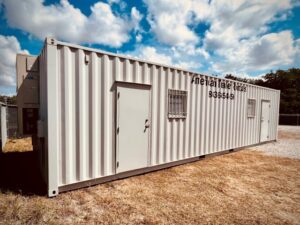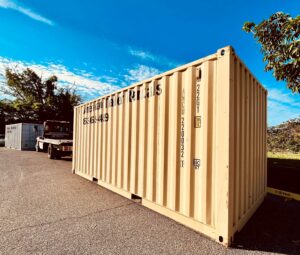
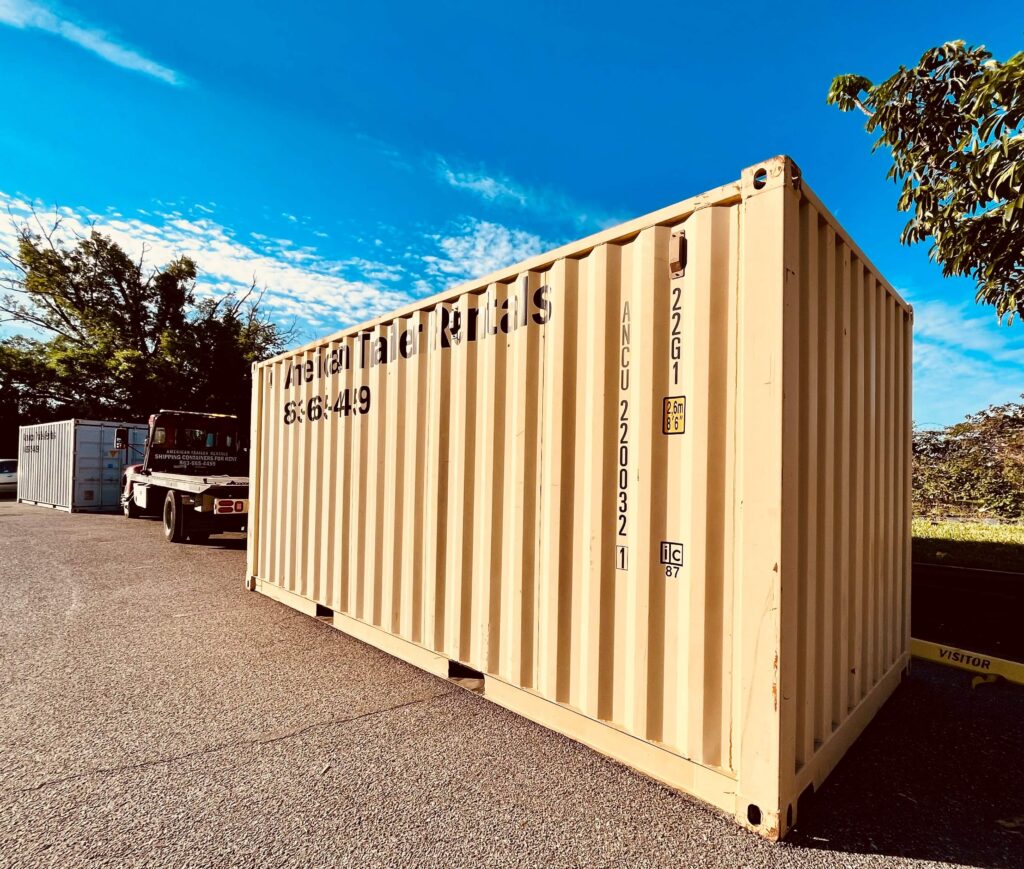
Storage containers have become super popular for Americans to store everything from jobsite materials and equipment, to household items, and even to convert into tiny homes! They’re durable, highly secure and affordable! However, if you live in a southern state, like Florida, there is a major factor you need to consider before placing one of these bad boys on your property: Heat.
Shipping containers sitting directly under the Florida Sun can become DANGEROUSLY hot.
Okay, but how hot really?
On a typical Florida summer day, outside temperatures often range from 90°F to 95°F.
While that may already feel uncomfortable, the temperature inside an uninsulated shipping container can climb much higher. Feeling somewhere between a pizza oven to the surface of the sun.
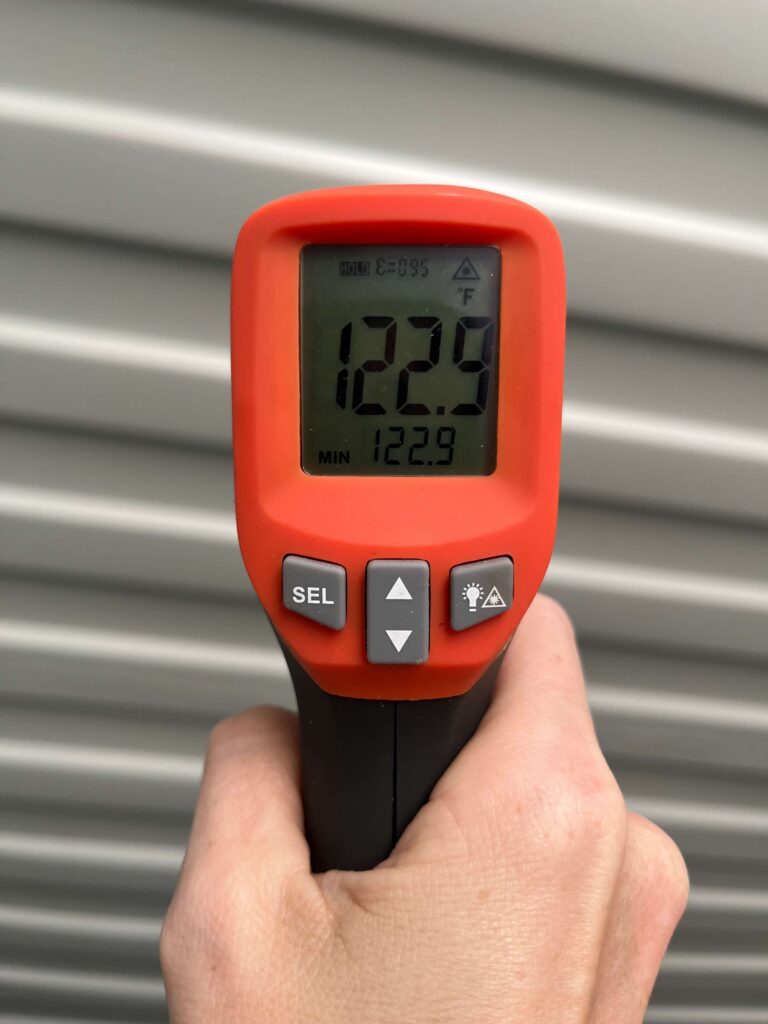
We did some research at our yard in Lakeland, FL in the middle of summer when it was 92°F. Here’s what we found! The exterior of a lightly colored beige container was 107°F.
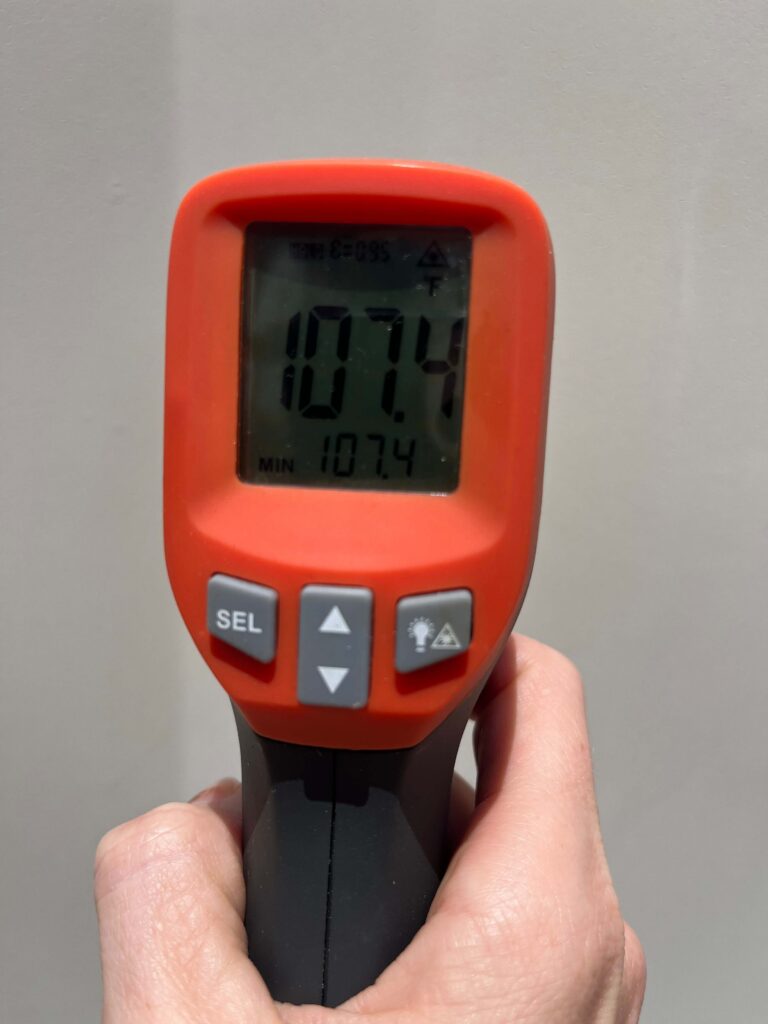
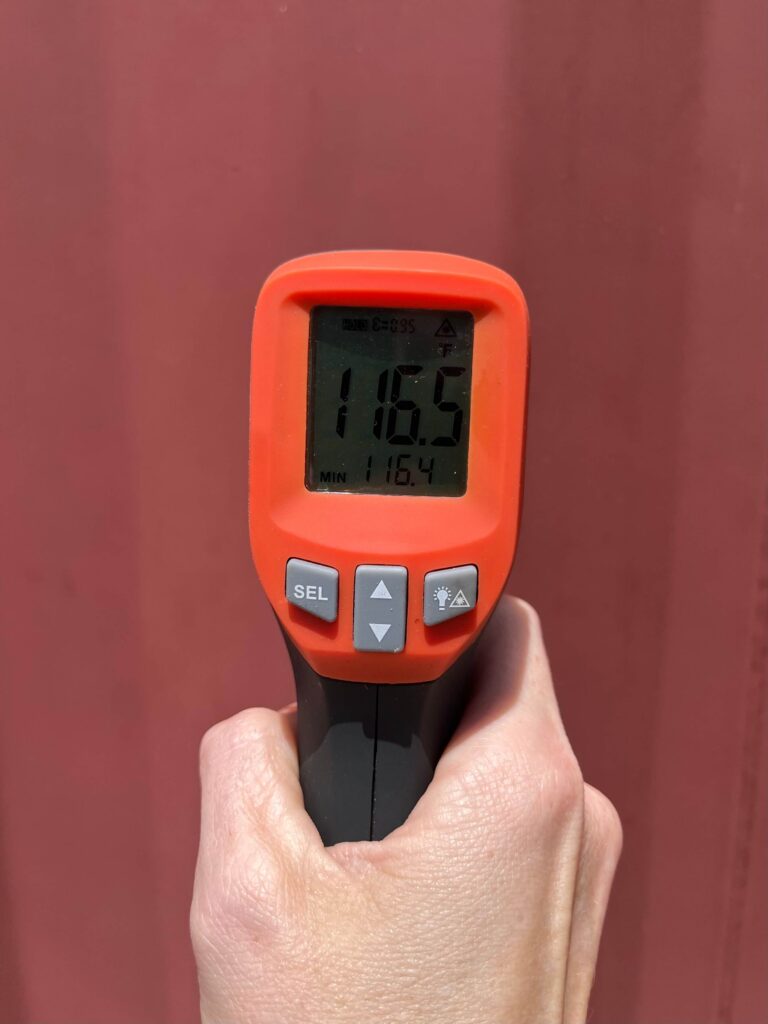
A darker red container getting the same sun at the same time was 116°F – nine degrees higher!
The interior of the beige container was 122.9°F!
Now that’s a hot day in FL, but it can get even hotter! We wouldn’t be surprised if these temperatures climbed all the way to 140°F for the hottest possible days in the darkest colored containers. And that’s hot enough that could damage or warp certain materials.
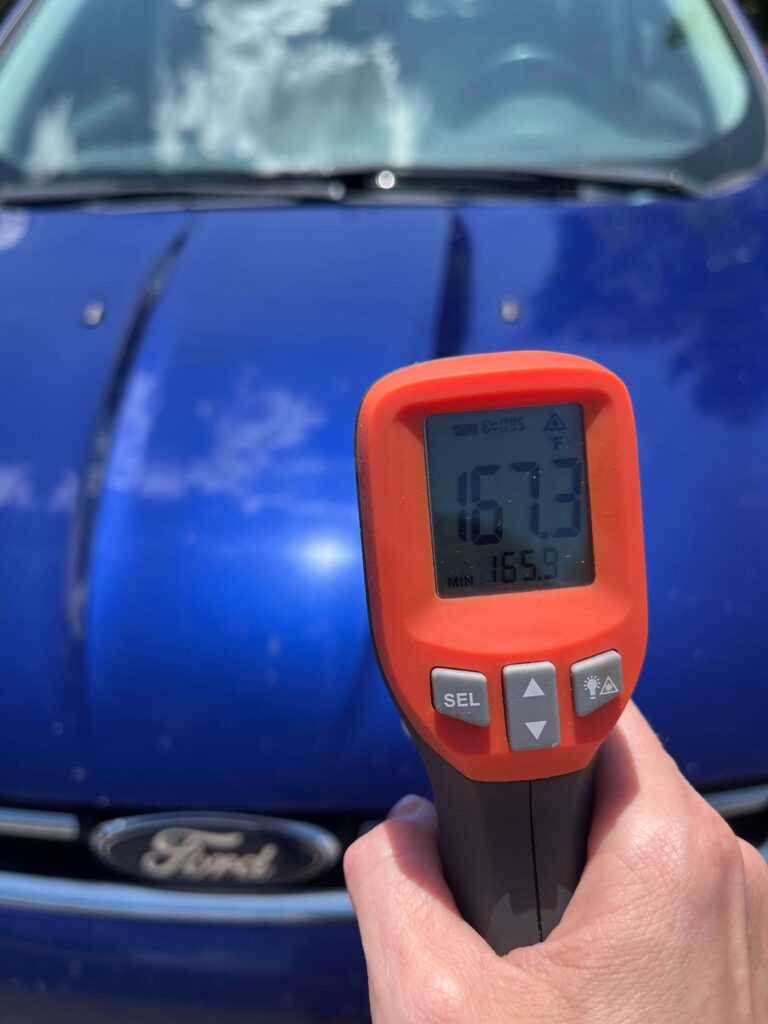
Just out of curiosity, we also checked the temperature of the hood of our car that had been parked for 8 hours. It was dark blue and came in at 167°F ! The color clearly makes a big difference!
Why they get so hot!
The primary reason is simple: steel absorbs and transfers heat extremely efficiently.
During the day, the sun beats down on the container’s roof and walls. Instead of photosynthesizing and providing the earth with oxygen, the container just gets hot.
The steel absorbs that solar energy and radiates it inward, turning it into an oven. Since most storage containers have minimal ventilation and are tightly sealed to keep out weather and pests, the trapped hot air continues to build throughout the day. We haven’t tried cooking any pizzas in one of our containers but I’ll chat with our manager about trying this in the future.
Several factors can make the problem even worse:
- Dark-colored containers absorb more heat than light-colored ones. Most of our containers are a light grey or beige color so that helps significantly!
- Lack of shade allows the sun to strike the container all day long.
- Poor ventilation traps hot air inside. Most containers are ventilated but it’s minimal
- Florida’s high humidity can make any type of heat feel 10-20 degrees hotter
What Should You Avoid Storing Inside?
Extreme heat can ruin many common household and business items. Avoid storing the following in a uninsulated shipping container that doesn’t get ventilated:
- Electronics such as televisions or computers; or anything that holds batteries
- Anything combustible or that has the potential to melt
- Flammable materials like paint, chemicals, aerosol cans or propane tanks
- Medications, vitamins, and supplements that require temperature control
- Photographs, important documents, and books
- Wooden furniture that may crack or warp
- Food items, pet food, or anything that may spoil
If an item wouldn’t survive being left inside a parked car during a Florida summer, it probably shouldn’t be stored inside a shipping container either.
Safety Concerns
Excessive heat inside a shipping container can potentially be dangerous!
Never spend too much time in a closed container. Temperatures can rise quickly and that can be life threatening. Always let people know if you’ll be spending more than few minutes in a container and make sure the doors are open while you’re inside!
How to Keep a Shipping Container Cool
Fortunately, there are several effective ways to reduce heat buildup.
- Provide Shade: place the container under a carport, shade sail, or trees. This can dramatically lower interior temperatures.
- Choose a lighter color! (That’s what we offer at ATR!)
- Ventilation: all containers should have small vents but you can purchase a container and install more vents or a powered exhaust fan to help remove trapped hot air.
- Add Insulation: Spray foam insulation is often considered the best option for Florida because it reduces heat transfer and helps control moisture.
With proper planning, shipping containers can work well in Florida. But ignoring the heat can turn your investment into an expensive metal oven. If you’re considering a container for storage, a workshop, or a future home, cooling and insulation should be part of the plan from day one.